

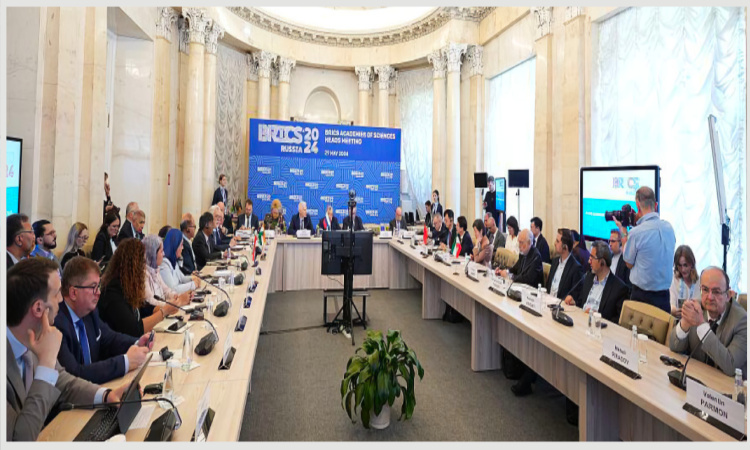
BRICS Academic Networking and Enhancing Scientific and Technological Collaboration Among Member Countries
BRICS academic networking plays a crucial role in strengthening sustainable collaboration among member countries in science, technology, and innovation. Through this network, member countries can provide evidence-based scientific recommendations to government institutions active in science, technology, and innovation. The BRICS Academic Assembly also serves as the main platform for interaction among experts and scientists.
Network and Academic Assembly Objectives
The main objectives include encouraging academic exchanges, strengthening dialogue between governments and universities, and providing policy advice in science, technology, and innovation. Representatives at annual meetings outline key collaboration opportunities in areas such as global governance, international security and stability, economic and trade cooperation, equitable development, energy, food security, and environmental protection.
History of Meetings and Networking
The first BRICS leaders’ summit took place in 2009 in Yekaterinburg, Russia, while the first BRICS scientists’ meeting was held in December 2008 in Moscow. The network of research centers from five countries was established simultaneously with South Africa’s accession during the third summit, and in 2013, the BRICS Think Tanks Council (BTTC) was launched.
16th BRICS Academic Assembly
The 16th BRICS Academic Assembly, themed “University Partnership for Peace, Development, and Prosperity,” was held from May 23–25, 2024, in Moscow. Representatives from BRICS science academies participated in three tracks: Policy and Security, Economy and Finance, and Cultural and Humanitarian Dialogue.
Recommendations from the BRICS Think Tanks Council
- Promote multilateralism and expand the BRICS group
- Reject unilateral sanctions and enhance security
- Increase market transparency and economic cooperation
- Use local currencies in trade and investment
- Promote sustainable development and environmental protection
- Enhance innovation and diversify energy resources
- Increase multilateral cooperation and people-centered interactions
- Exchange best practices in digital economy and technology
- Develop research in critical and emerging technologies
- Promote collaboration in culture and sports