BRICS Contingent Reserve Arrangement (CRA): History, Structure and Operational Challenges
Introduction and Background
The BRICS Contingent Reserve Arrangement (CRA) was established in 2015 with the objective of providing short-term financial support to member countries facing balance-of-payments pressures. The operationalization of this mechanism began around 2018 through the implementation of test-run scenarios, marking its gradual transition toward practical functionality.
Operational Structure and Instruments
Macroeconomic Information Exchange System (SEMI)
In 2016, CRA member states, in cooperation with their central banks, established the Macroeconomic Information Exchange System (SEMI) along with a joint research group. This framework enables the exchange of macroeconomic data, risk monitoring, and policy coordination among members, strengthening transparency and collective financial oversight.
Resources and Member Contributions
Resource commitment charts and tables indicate that each member country has pledged a different share of financial resources to the CRA. The image below illustrates the member countries and the volume of resources committed by each.
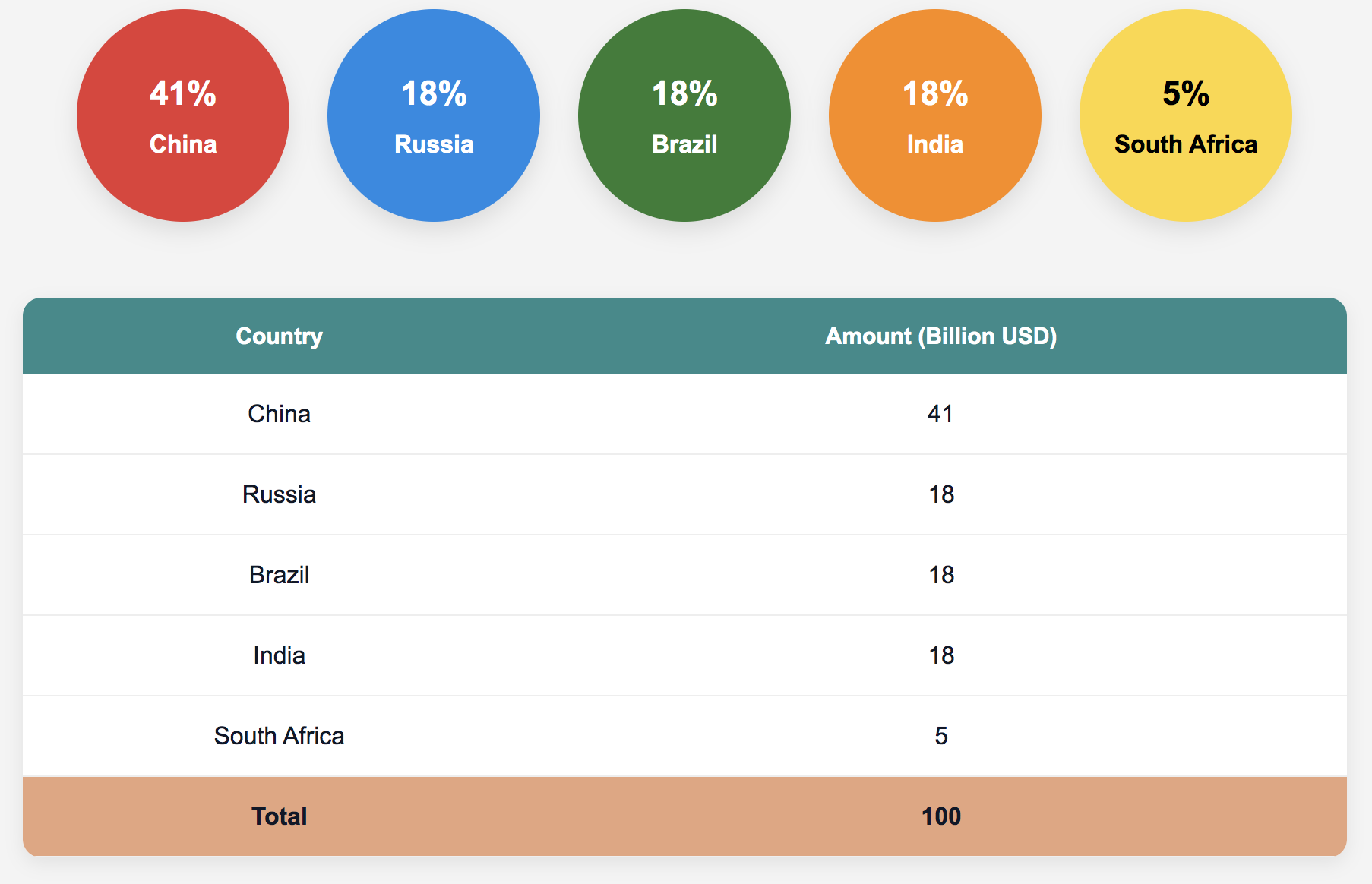
BRICS CRA member countries and the volume of committed resources
Cooperation with the International Monetary Fund and Operational Challenges
Since 2021, discussions have emerged regarding the initiation of cooperation between the CRA and the International Monetary Fund (IMF). According to the CRA Agreement, up to 70 percent of the maximum access limit for financial support is linked to the requirement of an IMF-supported program.
This condition may raise questions about the level of operational independence of the mechanism, particularly for members seeking greater financial autonomy at the international level.
Operational and Analytical Notes
- The launch of operational test scenarios in 2018 demonstrates the CRA’s gradual move toward practical implementation.
- The IMF-linked access condition introduces a degree of reliance on established international financial institutions.
- The SEMI system plays a key role in enhancing transparency, data exchange, and policy coordination among members.
Overall, the CRA represents an important regional financial instrument designed to manage short-term currency and liquidity pressures. However, its interaction with global financial institutions and the operational conditions embedded in its framework will significantly influence its future effectiveness.
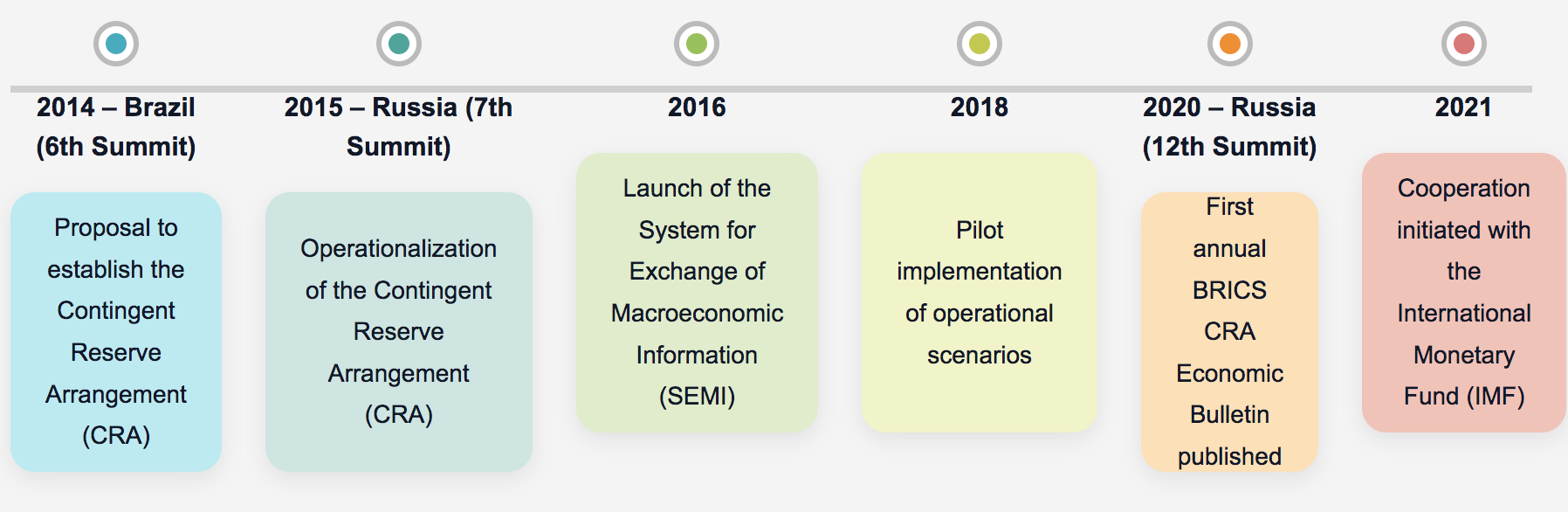
Macroeconomic Information Exchange System (SEMI) and its coordination role within the CRA