

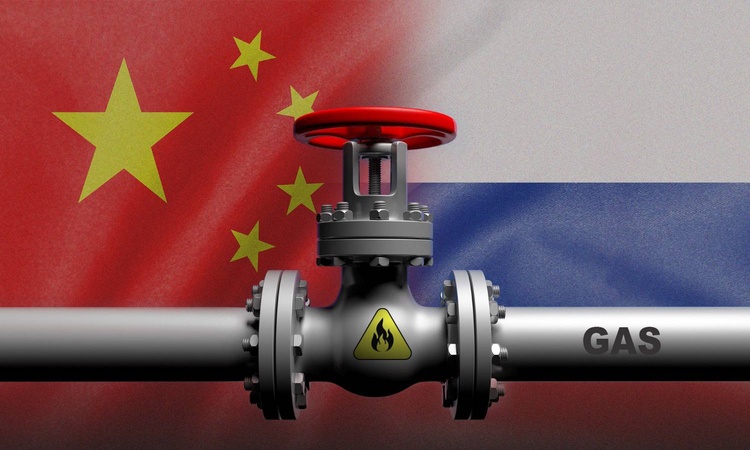
Introducing the “Power of Siberia 2” Project and Its Economic and Geopolitical Implications
This project offers multiple advantages for both parties. Following the Ukraine conflict, Russian gas exports to Europe experienced a sharp decline—from 157 billion cubic meters in 2021 to 39 billion cubic meters in 2025. The pipeline creates a secure and vital market for Russia’s gas output, serving as a replacement for the lost European market.
While the project’s annual revenue (between $2.5 to $4.3 billion) does not match Europe’s $20 billion annual income, it still represents a significant contribution to Russia’s energy economy. The project is also viewed as a political victory for Russia and reflects the depth of cooperation with China.
Additionally, access to cheaper and more reliable gas from Russia reduces Beijing’s dependence on liquefied natural gas imports from other suppliers, thereby increasing China’s energy source diversification. This pipeline insures China against potential supply shocks in West Asia (Middle East) or conflicts with the West.
From a geopolitical perspective, the project demonstrates the ongoing shift of Russia’s energy focus from West to East. Once operational, China will purchase more gas from Russia. “Power of Siberia 2” goes beyond an economic project, symbolizing the growing strategic convergence between Moscow and Beijing in the face of Western pressures—a vital economic necessity for Russia and an opportunity to enhance energy security and secure better prices for China.