

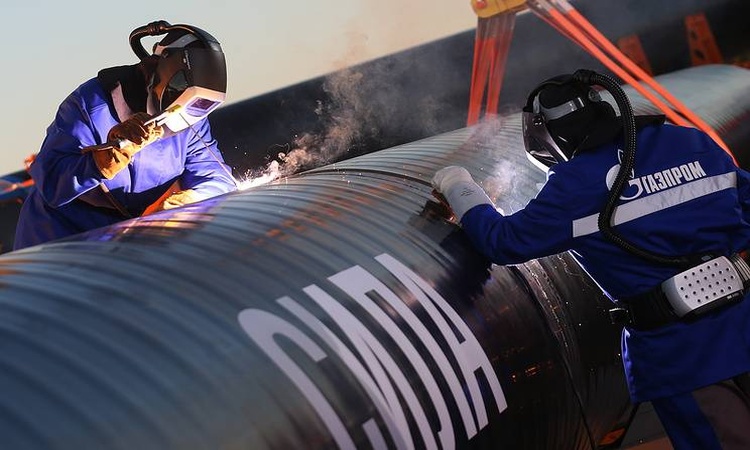
Introduction of the “Power of Siberia 2” Project for Transforming Gas Trade
To restructure energy transit routes across Eurasia and establish a new artery for gas trade, Russia and China have reached an agreement on the construction of the “Power of Siberia 2” pipeline. This project is now recognized as one of the most significant strategic developments in the global energy map.
The “Power of Siberia 2” pipeline, spanning over 4,000 kilometers, begins at the gas fields of Western Siberia and passes through Mongolia to China. Implementing such a project presents major engineering challenges, requiring the use of ice-resistant technologies, intelligent pressure monitoring systems, internal inspection robots, and specialized structures to withstand extreme temperature variations along a complex, multi-climate route.
With an annual capacity of 50 billion cubic meters of gas, the pipeline complements the existing “Power of Siberia 1” line, which currently transports approximately 38 billion cubic meters of natural gas annually from Eastern Siberia to China.
Passing through Mongolian territory, “Power of Siberia 2” will not only deepen strategic ties between Moscow and Beijing but may also have significant implications for global gas markets, particularly affecting major exporters such as the United States, Qatar, and Australia.
Estimates indicate that the construction cost of the project ranges from $13.6 to $34 billion. The construction of the Russian section is expected to take around three years, while the precise timeline for the Chinese segment has not yet been officially announced.
The CEO of Gazprom has described the project as a crucial step in strengthening and expanding the strategic partnership between Russia and China, ensuring a reliable and sustainable supply of clean energy (natural gas) to China, and meeting the growing energy demands of the Chinese economy.